
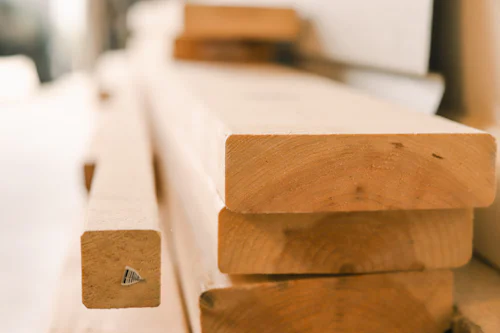
The Canadian forestry industry is enduring its greatest challenges in more than a decade, says a new report just published by the Financial Times, and the problem isn’t entirely due to the Trump administration’s tariff policies.
Almost out of nowhere, the demand for Canadian softwood lumber on the part of U.S. homebuilders has markedly declined in recent months, prompting a double-digit drop in exports.
The decline is particularly painful, notes the newspaper, since last year “about two-thirds of the country’s softwood production was exported, with 90% of that heading to the U.S.”
At the same time, lumber prices have been on a roller coaster, dropping by double digits earlier this fall.
None of this is to suggest that the industry has not been impacted by Trump’s tariff moves, say experts who point out that the U.S. has this year imposed a 35.1% duty on Canadian softwood lumber.
A tariff of 25% set to go into effect on October 14 has additionally been imposed on kitchen cabinets and upholstered wooden products.
Trump has made his tariff moves partly in response to a report that was conducted earlier this year by the Department of Commerce. That report, remarked the President, revealed that wood products from Canada were crossing the border “in such quantities and under such circumstances as to threaten to impair the national security of the United States.”
This is in some ways an old song. Notes the publication Global News: “The U.S. has long accused Canada’s softwood lumber sector of violating rules on anti-dumping; flooding a market with cheaper, subsidized products to disrupt a domestic industry.”
In response, the British Columbia Lumber Trade Council has argued that Trump’s lumber tariffs “will not improve U.S. national security, they will only drive up lumber costs, making housing even less affordable for American families and undermining the integrated trade relationship that benefits both our countries.”
What happens next is anyone’s guess. Canada at first considered but then abandoned the idea of mounting a legal challenge to the Trump tariffs. Instead, a Canadian government spokesperson has said that for the present the country is more interested in maximizing “long-term interests and prospects for a negotiated resolution with the United States.”
The National Association of Home Builders agrees. In a statement issued last week, the group said it was urging the Trump administration to “quickly enter into negotiations with Canada and other global trading partners to resolve ongoing trade issues in a fair and equitable manner that eliminates tariffs on lumber and other building materials.”
October 9, 2025
By Garry Boulard
Photo courtesy of Unsplash