
Upwards of 65 members of the House of Representatives will not be returning to their seats, according to a running count currently being maintained by the Associated Press.
Those 65 House members are joined by another 12 members of the U.S. Senate, adding up to a 14% membership changeover, the highest figure in well over a decade.
In the House at this point 27 Democrats and 38 Republicans are leaving. That figure, according to the AP count, includes “those who have announced their retirement or lost renomination.” The total as of now does not include the 13 members who either resigned or died during their term.
The figures for the Senate are showing 12 members who are leaving, mostly because they are retiring. Of that 12, one is opting out to run for another office.
The impact of the retirements on the coming November midterm elections is not yet clear, especially in the House where the Republicans hold a precarious 219 to 212 edge. In the Senate where the Republicans have a little bit more breathing room with a 53 to 47-seat majority, 4 Democrats are leaving along with 8 Republicans.
Arizona has seen one Republican Congressman, David Schweikert, leave in an unsuccessful bid to run for governor. Successful in that primary contest was Republican Representative Andy Biggs, who is also exiting the lower chamber to make a November bid for the statehouse.
Colorado is losing the services of Democrat Representative Diana DeGette, who lost in her primary contest. None of the three New Mexico members of Congress are retiring.
No member of the U.S. Senate from Arizona, Colorado, or New Mexico is retiring.
According to a study conducted by the Brookings Institute, the large number of announced House retirements may reflect a “broader frustration with Congress as an institution and workplace.”
The exits, says the study, “suggests a growing consensus among members that they can get more done outside of Congress, and perhaps the job’s prestige may not hold the same sway that it used to.”
Casey Burgat, an associate professor at George Washington University, told The Hill publication that a large segment of the members who are retiring are defined as “workhorses” who “seem to be disillusioned with increasing political polarization and low legislative productivity.”
July 24, 2026
By Garry Boulard
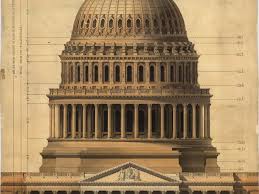
Drawing by Architect of the Capitol