
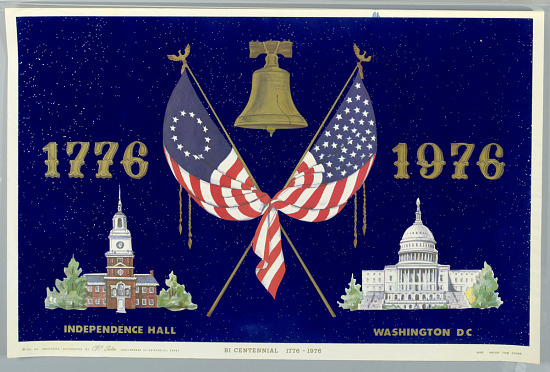
As America nears its 250th birthday in July, a Pew Research Center study has looked at how the country has changed since its last big birthday on July 4, 1976, discovering three big differences in the process.
The population of the country with more than 70 million Baby Boomers still eating, drinking, and listening to music, has aged significantly in the last half century. But the U.S. has also become more ethnically and racially diverse and has a foreign-born population that has more than tripled.
In the study, The United States at 250, it is also noted that Americans are less likely to be married than in 1976, while more women than ever before are now college-educated.
In 1976, the year that two centrist candidates, Democrat Jimmy Carter and President Gerald Ford, were the major nominees in the presidential election, roughly 80% of the population was white. Today that figure is just over 56%.
At the same time, the Hispanic population has grown from around 5% to 20%, while Asian Americans, who made up less than 1% are now at 6%. The Black population, meanwhile, has remained somewhat static, increasing from just under 10% to just under 12%.
The immigrant population has been on a steady rise since 1976, from around 5% in the mid-1970s to 11.1% in the year 2000, and nearly 15% in 2024.
Regionally, population trends during these years have been all about the Sunbelt, that swath of some 12 states running from North Carolina to southern California, which has jumped from 47% of the population in the mid-1970s to more than 60% today.
Around 11% of Americans possessed at least a bachelor’s degree at the time of the 1976 bicentennial compared with just under 40% today. Just over 40% of all women then were part of the country’s labor force, while today that figure has bloomed to 60%. The number of men actively in the labor force has seen a decline from 77% to 69%.
Despite these labor force changes, says the report, “the percentage of adults in the middle class has decreased since 1970, as the share in both lower-income and upper-income tiers has grown.” The upper income segment marginally increased from 14% in the 1970s to around 19% at the time of the Covid-19 pandemic. but has seen a slight 1% decline since then.
Finally, homeownership, that symbol of the American dream, has remained an unchanging constant through the decades, with 63% of the population owning a house in 1970, a figure that today stands at 65%.
Homeownership, notes the Pew study, “has slightly decreased among adults ages 18 to 64, but has expanded significantly for those 65 and older.”
March 27, 2026
By Garry Boulard
Image of US Bicentennial poster