
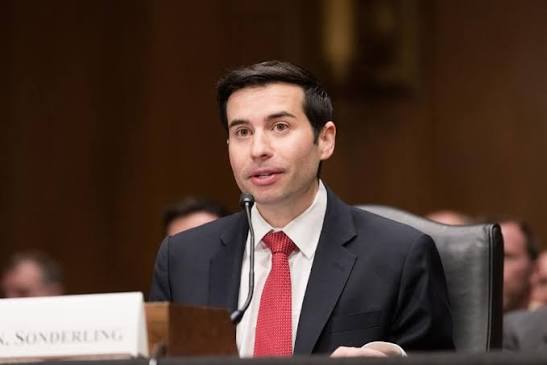
In an announcement released immediately after publication of the Bureau of Labor Statistics October job report, Keith Sonderling declared: “The American labor market is the strongest it has been in more than half a century.”
Sonderling’s exuberance appears to be borne out by the numbers, with more than 165,000 new jobs created last month and the nation’s unemployment rate shrinking to 4.1%.
The Labor Secretary added that since early 2025, “we have surpassed 1.2 million new private sector jobs and doubled the monthly break-even rate.”
The job figures comprised the largest monthly increase since August, when the figures stood at 186,000; and before that, March, which saw an increase of 214,000 jobs.
Analysts noted that not only did companies across the board take on new workers, but even for those who didn’t increase their staffs, layoffs were minimal.
The BLS report documented a job gain more than 70,000 in the professional and business services sector; followed by the always-robust healthcare sector with 42,000 new jobs.
Manufacturing and warehousing were additionally up with gains of 25,000 jobs; along with a construction industry gain of 3,000 primarily fueled by nonresidential building and nonresidential specialty trade contractors employment growth.
The October numbers were particularly surprising given an initial analysts’ forecast of 65,000. Even more, a revised survey with many of those same experts hedging their bets guessed the job gain would be no more than 60,000.
In an interview with the Financial Times, Mike Reid, chief economist at the global investment bank RBC Capital Markets, said the BLS report “confirms the labor market is on solid footing.”
“The U.S. labor market crushed expectations in October,” remarked the publication Barron’s, adding that many of the new jobs “were related to the buildout of artificial intelligence, with employment in manufacturing of fabricated metals and computer and electronic products ticking up.”
Sonderling additionally pointed out that current jobless claims are now at around 189,000, “matching the lowest level recorded since 1969.”
November 9, 2026
By Garry Boulard
Photo courtesy of Senate Committee of Health, Education, and Labor Pensions