
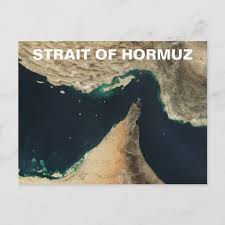
Iran’s policies regarding access to the Strait of Hormuz may be undergoing a historic change likely to significantly disrupt trade well into the foreseeable future.
So asserts a new report just released by the Washington-based Brookings Institution, which warns that the country’s new Strait of Hormuz policies “may depend on political alignment, rather than long-established norms of open transit.”
The waterway between the Persian Gulf and the Gulf of Oman, the Strait of Hormuz is regarded as the most important such energy chokepoint in the world, providing passage to upwards of 20% of the petroleum and global liquefied natural gas internationally.
Ever since the beginning of the U.S/Iran war in late February, the Strait of Hormuz has been largely blocked by the latter country, which also dropped sea mines into the waterway. For a brief period in mid-April Iran announced that the Strait of Hormuz would be open to commercial shipping as the result of an Israel-Lebanon ceasefire, before closing it again on April 18.
Now the Brookings report is asserting that a significant new wrinkle is Iran’s “reported preference for ships from allies, such as Russia and China, or those with ties to Iran, such as India and Pakistan.”
“To obtain permission to transit the strait,” continues the report, “vessels must email information not only about the cargo and the vessel’s origin and destination, but also the flag, registered owner and manager, and nationalities of the crew.”
The importance of the waterway is seen in the volume of crude oil and petroleum that travels through it, a volume that saw 21 million barrels a day last year, up from 19 million barrels daily in 2019.
Notes Kari Heerman and David Wessel, Brookings senior fellows in the report called “Checkpoints and Coercion: Iran’s Challenge to Maritime Openness,” any move on the part of Iran to substantially change in a permanent way its Strait of Hormuz access policies would be unprecedented.
“Governments have increasingly used trade, investment, technology, and industrial policy to pursue strategic objectives, often at the expense of established international rules and norms,” write Heerman and Wessel, “yet the physical circulatory systems that move goods around the world have remained largely open.”
Exactly what Iran will ultimately do regarding Strait of Hormuz access policies in the months and even years to come remains anyone’s guess.
But an ongoing restrictive approach, the report contends, may eventually spread to other maritime chokepoints, disrupting trade and in the process weakening a “foundational pillar of the global economy: reliable, depoliticized access to key waterways.”
June 12, 2026
By Garry Boulard
Strait of Hormuz postcard