
All eight major party gubernatorial candidates in Arizona, Colorado, New Mexico, and Texas have come out, in varying degrees, not to support future state-funded automated license plate readers.
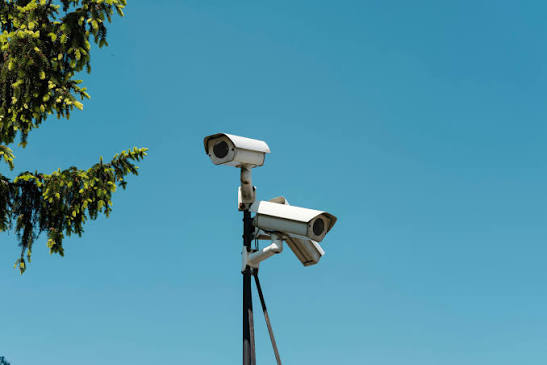
Popularly known as Flock cameras and manufactured by the Atlanta-based Flock Group, the systems are most often attached to poles on public rights-of-way and provide automated license plate recognition, mass video surveillance, and software to compute received data.
While Flock manufactures the greatest number of such cameras, the companies Axon, Motorola Solutions, and Axis Communications are also providing law enforcement agencies versions of the technology.
The camera systems, noted USA Today earlier this year, have been used by investigators to solve crimes, “and locate stolen vehicles and track vehicles of missing people.”
To date more than 5,000 law enforcement agencies in some 6,000 communities across the country have installed the cameras, with one industry estimate saying there are more than 120,000 such cameras currently in operation.
The concerns in response to the cameras has focused on where the information being photographed ends up and how it’s being used.
Communities, notes the publication Mother Jones, are now increasingly pressuring local lawmakers to rein them in, “leading municipalities and counties nationwide to cancel contracts and remove the cameras altogether.”
Several referendums are now being presented to voters in next month’s elections addressing the cameras’ use. An initiative in York, Maine is calling for their outright ban. In League City, voters are being asked to decide, up or down, on legally permitting the camera systems’ use.
Meanwhile, Missouri Republican Senator Josh Hawley has introduced legislation that would govern the use of such systems. A similar bill is being advanced by Vermont Democrat Senator Bernie Sanders.
For all the press attention, 32% of Democrats and 26% of Republicans in a poll conducted two months ago by the site Data for Progress indicated support for the cameras, while 40% of Democrats responded negatively and 39% of Republicans said the same thing. But the largest responses among both groups came from those agreeing with the statement that they “haven’t heard enough to say.”
October 29, 2026
By Garry Boulard
Photo courtesy of Unsplash