
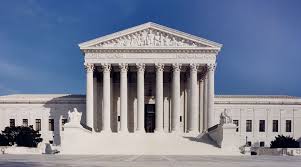
Even though conservatives make up a decided majority of the current U.S. Supreme Court, the judges appear to be doubting the constitutional validity of President’s Trump’s tariff policies.
That, at least, is the collective take on a hearing before the highest court on Wednesday as several justices aggressively questioned the right of the President to invoke the International Emergency Economic Powers Act to impose tariffs without the prior approval of Congress.
In what turned out to be a nearly three-hour session, the justices, noted a report filed by the Wall Street Journal, expressed skepticism about the President’s “authority to impose sweeping measures on countries around the world.”
At issue is the contention among those suing the Trump administration that the imposed tariffs are essentially taxes, and that only Congress is authorized to impose taxes.
Speaking before the justices, Solicitor General D. John Sauer denied that the tariffs could be so defined. “These are regulatory tariffs. They are not revenue-raising tariffs. The fact that they raise revenue is only incidental.”
Sauer’s remarks, said the Washington Post, were at variance with comments made earlier by the President, who has “repeatedly celebrated the revenue gained from the 10% universal tariff he has imposed on all foreign goods.”
As of this August, the government had collected nearly $90 billion from the newly imposed tariff duties.
Adding confusion to the question is whether the government will have to refund any of the tariff revenue should the Supreme Court rule against Trump’s policies. Parties that are a part of the lawsuit before the court, noted Neal Katyal, an attorney representing one of the plaintiffs, will get refunds. But other importers may seek relief through what could prove to be a complex administrative process.
Remarked Justice Amy Coney Barrett: “It seems to me like it could be a mess.”
Chief Justice John Roberts said he was concerned about the long-range implications should the Higher Court side with the White House, wondering if a president could then “impose tariffs on any product from any country in any amount, for any length of time.”
Pondering the possibility of the Supreme Court validating Trump’s position, Justice Neil Gorsuch asked: “What would prohibit Congress from just abdicating all responsibility to regulate foreign commerce?”
It is not known when the Higher Court will make a ruling in the case, although both sides have asked for an expedited decision.
November 6, 2025
By Garry Boulard
Image courtesy of Supreme Court